Split One IAB Content Label Into a Universe of Meaning

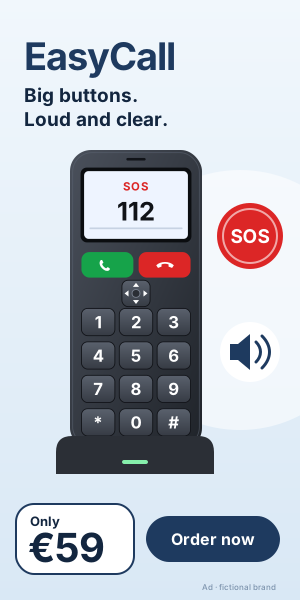
In Different Label, Right Ad we showed a page and an ad that belong together but carry different IAB labels: an article for older readers labelled Eldercare, and a big-button phone labelled Cell Phones. Labels kept them apart. Vectors, which compare what the texts mean, put them together.
This post is about the opposite problem. Sometimes one label covers far too much.
One label, four audiences
Take four phone brands. All of them buy ads in Cell Phones, because that is what they sell:
| Advertiser | Sells | For | Targets |
|---|---|---|---|
| EasyCall | Big-button phone for seniors | Older people and their families | IAB19-6 Cell Phones |
| TrailRock X1 | Rugged phone for the outdoors | Hikers and field workers | IAB19-6 Cell Phones |
| Buddy | A child's first phone | Parents of children aged 8 to 12 | IAB19-6 Cell Phones |
| Framelo Pro | Camera phone for creators | Vloggers and filmmakers | IAB19-6 Cell Phones |
Now take four articles, all labelled Cell Phones too: how to choose a phone for a grandparent, phones that survive a week in the mountains, a parent's checklist for a child's first phone, and the best phones for shooting video.
By label, every ad fits every page. A grandparent's phone guide is as good a place for a camera flagship as for EasyCall. We turned all eight texts into vectors with OpenAI text-embedding-3-large and compared every page with every ad:
All four pages and all four ads are IAB19-6 Cell Phones. Labels can't tell them apart.
| EasyCall | TrailRock | Buddy | Framelo | |
|---|---|---|---|---|
| Phone for a grandparent | ✓ | ✓ | ✓ | ✓ |
| Phones for the mountains | ✓ | ✓ | ✓ | ✓ |
| A child's first phone | ✓ | ✓ | ✓ | ✓ |
| Phones for shooting video | ✓ | ✓ | ✓ | ✓ |
Cosine similarity between each page and each ad brief. The darker the cell, the closer the meaning; the outlined cell is the best ad for that page.
| EasyCall | TrailRock | Buddy | Framelo | |
|---|---|---|---|---|
| Phone for a grandparent | 0.65 | 0.38 | 0.44 | 0.27 |
| Phones for the mountains | 0.40 | 0.66 | 0.34 | 0.33 |
| A child's first phone | 0.45 | 0.34 | 0.65 | 0.20 |
| Phones for shooting video | 0.32 | 0.32 | 0.23 | 0.63 |
Each page's best ad is the one it was written for, with a similarity of 0.63 to 0.66, and the runner-up is at least 0.19 behind. Even the second places make sense: the grandparent page comes closest to Buddy after EasyCall, and the first-phone page to EasyCall after Buddy. Both are simple phones with an SOS button that a family buys for someone it worries about.
Try it: pick a page
Choose a page and flip between Labels and Vectors:
Phones That Survive a Week in the Mountains
Rain, drops onto rock, cold that drains a battery overnight and valleys with no signal: the mountains are hard on phones. Look for a water and dust rating of IP68 or better and a phone that is drop tested to a military standard. The screen should work with wet fingers or gloves and stay readable in bright sun. A big battery that lasts five to seven days matters more than a thin body, and satellite messaging lets you send an SOS when there is no mobile network. Leave the glass flagship at home.
With labels, the four brands compete for every phone page, and the one with the biggest budget wins, whatever the page is about. With vectors, each page has an obvious best ad, and each brand's budget goes to the readers who might actually buy its phone.
Same label, different price
A match is not only yes or no. Because similarity is a number, a bidder can use it to decide how much a page is worth.
EasyCall is willing to pay up to $6 CPM. After part 1 it also targets the IAB label Eldercare. Here are two pages that both carry that label:
Accessibility Settings Every Family Should Know
Every phone, tablet and TV hides settings that make it easier to use for someone whose eyes, ears or hands are not what they were. Turn on larger text and bold fonts, and raise the contrast so buttons stand out. Make calls louder and switch on hearing aid mode. Set up emergency contacts that can be reached from the lock screen with one press. Slow down double taps, and let the device read messages aloud. Ten minutes with a parent's phone can save months of frustration.
Saying Goodbye to Grandma: Coping With Grief
The death of an elderly parent or grandparent can arrive slowly, after a long illness, or all at once. Either way, the weeks that follow are full of decisions: the funeral, the paperwork, the house and the belongings. Give yourself time. Talk to children honestly and simply about what happened. Share memories, look through old photographs and let people help. If grief stays heavy for months, a support group or a counsellor can make a real difference.
By label, both pages are the same to EasyCall, so it bids the full $6 on each. One of them is a guide to the settings that make a phone easier for an older parent. The other is about the death of a grandparent. By match, EasyCall pays $4.30 for the first and stays out of the second.
The rule behind those two prices is short:
function easyCallBid(similarity) {const MAX_BID = 6.00 // USD CPMconst FLOOR = 0.24 // below: unrelatedconst CEILING = 0.65 // from here: perfectif (similarity <= FLOOR) {return null // no bid}const range = CEILING - FLOORconst climbed = similarity - FLOORconst fit = Math.min(climbed / range, 1)return MAX_BID * fit}easyCallBid(0.54) // 4.30easyCallBid(0.21) // null: no bid
- FLOOR 0.24
- Below this, a page counts as unrelated and EasyCall does not bid. 95% of the other posts on this blog, none of them about phones, score lower than this.
- CEILING 0.65
- A perfect fit, worth the full $6. It is the score of EasyCall's best page, "Choosing a Phone for a Grandparent".
- fit
- How far the page has climbed from the floor towards the ceiling, from 0 to 1. The accessibility guide, at 0.54, is about 72% of the way, so EasyCall bids about 72% of $6: $4.30.
- null
- No bid. The grief page, at 0.21, is below the floor.
The floor and the ceiling are not guesses. Both come from the model's own numbers: the floor from how EasyCall's brief scores against a hundred unrelated posts on this blog, the ceiling from its best page, the guide to choosing a phone for a grandparent above. No list of blocked keywords was needed to keep EasyCall off the grief page. Similarity is not a full brand-safety system, and we would still pair it with explicit rules, but here the meaning alone was enough.
Those two numbers were measured for one model, OpenAI text-embedding-3-large. In part 3 we look at what changes with another.
Under the hood
Here is the accessibility guide's bid end to end: the bid request that arrives with the page's vector, what EasyCall's bidder does with it, and the price it sends back.
{"id": "req-2048","imp": [ … ],"site": {"page": "familytech.example/…","cat": ["IAB6-9"], "cattax": 1},+ "user": { "data": [{+ "name": "agenticAudience",+ "segment": [{ "ext": { "aa": {+ "model": "text-embedding-3-large",+ "vector": "vACgeTwAoPy7AKAAvACg0DwAQ…"}}}]}]}}
- cat
- The label, IAB6-9 Eldercare. EasyCall targets it, so by label it would bid its full $6.
- model
- Tells EasyCall which model to compare with. Its brief was embedded with the same one.
- vector
- The meaning of the accessibility guide: 3,072 numbers packed into a 16,384-character string, cut short here.
// EasyCall's bidder, for every requestsimilarity = cosine(page.vector, brief.vector)= 0.54bid = easyCallBid(similarity)= 4.30
- similarity
- How close the page and EasyCall’s campaign brief are in meaning, from 0 to 1.
- easyCallBid
- The pricing function from the section above: no bid at or below 0.24, the full $6 from 0.65, in proportion between.
{"id": "req-2048","seatbid": [{ "bid": [{"impid": "1",+ "price": 4.30,"adomain": ["easycall.example"],"crid": "easycall-300x600"}]}],"cur": "USD"}
- price
- The bid, as a CPM: $4.30 instead of the flat $6. On the grief page with the same label there would be no response at all.
- adomain
- Whose ad it is.
- crid
- Which creative to show: the 300 × 600 EasyCall banner.
None of this is new to the most advanced bidders. Many of them already crawl pages, run their own machine learning models and keep their own databases of page and user embeddings. What the Agentic Audiences proposal changes is who has to do that work: when the vector comes in the request, every bidder gets the page's meaning without crawling it, and step 2 is a few lines of arithmetic.
Why this matters
Text embeddings and contextual targeting are not new in this industry. Companies such as GumGum built businesses on crawling the web and selling contextual targeting data, most likely with this kind of technology under the hood, giving advertisers better outcomes and publishers more yield.
What we described is a way to send that information transparently, straight from the source. The publisher attaches the page's meaning to the impression, and advertisers find matching opportunities faster and cheaper:
Target content far more granularly, without relying on third parties to curate inventory for them.
In this post: each phone brand found the page written for its buyers inside one shared label.
Send additional, safe metadata downstream with every impression, and earn more for pages that fit.
In this post: the accessibility guide earned $4.30 from EasyCall; a page with the same label earned nothing.
See ads they are actually interested in, that blend into the content, without their privacy being touched.
The vector describes the page, not the person reading it.
At Appliscale we build the infrastructure behind this: bidders, SSP and DSP integrations, Prebid setups and the data pipelines that turn pages and briefs into vectors. If you want to see how embedding-based matching and pricing would work on your own inventory, we are happy to talk.